How to Lower Cortisol Levels Naturally: A Gentle Guide to Restoring Balance
- alastair208
- Apr 5
- 13 min read
Updated: Apr 6
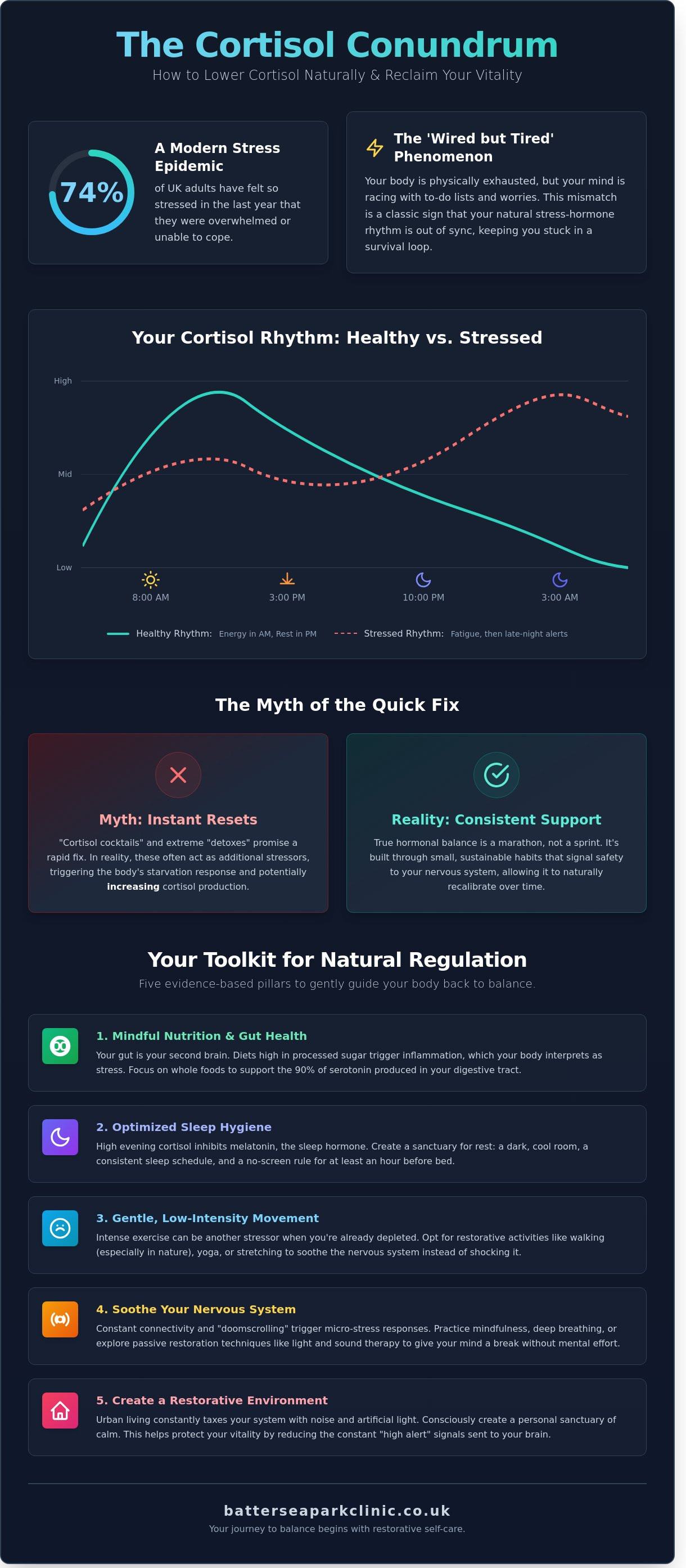
Have you ever felt completely exhausted yet found yourself staring at the ceiling at 2:00 am, your mind racing with a to-do list that never seems to end? It's a heavy burden to carry. According to a 2023 report by the Mental Health Foundation, 74% of UK adults have felt so stressed at some point over the last year that they were overwhelmed or unable to cope. You know that feeling of being "wired but tired," where your body is stuck in a survival loop and true rest feels out of reach.
We understand that you want to feel like yourself again without the need for clinical, intimidating interventions. This guide shows you exactly how to lower cortisol levels naturally, helping you transition from a state of constant alert to one of genuine vitality. You'll discover evidence-based, low-friction habits that honour your body's need for balance and calm. We will explore gentle movement, nutritional shifts, and simple mindfulness practices that create a supportive environment for your wellbeing to flourish once more.
Key Takeaways
Gain a clear understanding of the HPA axis and why evidence-based science is more effective than popular social media "cortisol cocktails."
Discover how to lower cortisol levels naturally through simple daily habits, such as optimising your sleep hygiene and embracing low-intensity movement in nature.
Uncover the power of "passive restoration" and how specialised light and frequency therapies can help soothe your nervous system without mental effort.
Learn how to transition from a state of survival to one of true vitality by viewing restorative self-care as an essential part of your wellbeing routine.
Table of Contents Understanding Cortisol: Your Body’s Natural Alarm System The Science of Stress: Why Quick Fixes Often Fail Natural Strategies to Regulate Stress Hormones Daily Beyond the Basics: Creating a Restorative Environment Beginning Your Journey to Balance at Battersea Park Clinic
Understanding Cortisol: Your Body’s Natural Alarm System
Cortisol is a vital steroid hormone produced by your adrenal glands, acting as a sophisticated control centre for your daily functions. It isn't just a response to pressure; it's the rhythm-maker for your entire system. This hormone regulates your metabolism, balances blood pressure, and manages your sleep-wake cycles. According to data from the Society for Endocrinology, cortisol levels usually reach their highest point at roughly 8:00 AM to provide that morning spark of energy before slowly declining as the day progresses.
The "fight or flight" response is your body's built-in survival kit. When you encounter a sudden threat, this mechanism releases a surge of energy to help you react. While acute stress is a helpful tool for short-term challenges, our modern lives often trap us in a state of chronic stress. This constant hormonal pressure can lead to persistent fatigue and a sense of being overwhelmed. Learning how to lower cortisol levels naturally is a gentle, supportive way to signal to your body that it's safe to return to a state of rest and recovery.
The "Wired but Tired" Phenomenon
Many people find themselves physically exhausted during the day yet unable to switch off at night. This happens because elevated evening cortisol levels directly inhibit the production of melatonin, your primary sleep hormone. You might experience a sharp energy slump at 3:00 PM, followed by a surge of mental hyperactivity once your head hits the pillow. Research suggests that a significant number of adults in the UK now report waking up at 3:00 AM with a racing mind, which is a classic sign that your natural hormonal rhythm is out of sync.
Why Urban Living Impacts Your Hormonal Balance
Living in a bustling environment like London creates a unique set of physiological challenges for your nervous system. The "London pulse" refers to the constant background hum of traffic noise and artificial light pollution that keeps your body on high alert. A 2023 study found that constant connectivity and smartphone "doomscrolling" can trigger micro-stress responses every few minutes, preventing your cortisol from ever reaching its baseline. Your environment dictates your hormonal state, so understanding how to lower cortisol levels naturally involves creating a personal sanctuary of calm amidst the urban noise to protect your vitality.
The Science of Stress: Why Quick Fixes Often Fail
Your body manages stress through a sophisticated internal communication system known as the Hypothalamic-Pituitary-Adrenal (HPA) axis. Think of this as a biological thermostat. When you encounter a challenge, your hypothalamus signals your pituitary gland, which then instructs your adrenal glands to release cortisol. While this system is vital for survival, it was never designed to be permanently switched on. A 2018 study by the Mental Health Foundation revealed that 74% of UK adults felt so stressed they were overwhelmed or unable to cope. When this system remains overactive, the solution isn't found in a "quick fix" or a viral social media trend.
Many popular "cortisol cocktails" or "adrenal resets" seen online lack rigorous scientific evidence. These trends often suggest that a single drink or a three-day hack can override complex endocrine functions. In reality, your body requires a steady environment to recalibrate. There is also the growing issue of the "stress of de-stressing." This occurs when health goals become another source of pressure. If a 10-step morning routine or a rigid supplement schedule causes you anxiety, it's likely increasing your hormone production rather than settling it. Learning how to lower cortisol levels naturally is a marathon of consistency; it's about making small, sustainable choices that support your personal wellbeing routine over months, not days.
Debunking the "Cortisol Detox" Myth
The term "detox" implies that cortisol is a toxin that can be flushed out of your system like a poison. It's actually a life-sustaining hormone that follows a strict 24-hour rhythm, peaking around 8:00 AM to help you feel alert. Attempting to "flush" it via extreme diets or restrictive cleanses often backfires. These methods place the body into a state of perceived starvation, which triggers the adrenal glands to produce even more cortisol to maintain blood sugar levels. A gentle, supportive approach is far more effective than any restrictive regime.
The Role of Inflammation and Gut Health
Your gut and brain are in constant dialogue through the vagus nerve. Research indicates that roughly 90% of the body's serotonin is produced in the digestive tract, meaning a troubled gut often leads to a troubled mind. Diets high in processed sugars trigger inflammatory responses that the body interprets as a physical threat, mimicking the effects of external stress. By focusing on whole foods and microbiome support, you provide the foundational stability required for how to lower cortisol levels naturally. Supporting your gut health is a quiet, powerful way to signal to your brain that the environment is safe and stable.
Natural Strategies to Regulate Stress Hormones Daily
Restoring balance starts with the gentle rhythm of your daily habits. It isn't about drastic overhauls; it's about consistent choices that signal safety to your nervous system. By making small adjustments to your environment and routine, you create a foundation where your body feels supported enough to let go of its defensive state.
Your sleep environment plays a vital role in this process. Your body needs a cool environment to drop its core temperature for deep, restorative rest. Aim for roughly 18°C in your bedroom. Dimming your lights 90 minutes before sleep encourages melatonin production, which acts as a natural counterbalance to stress hormones. This simple shift helps your brain transition from the busyness of the day into a state of calm.
Prioritise low-intensity movement: While intense gym sessions have their place, they can be counterproductive during burnout. A 20-minute walk in nature is often more effective than high-intensity training, which can spike cortisol by up to 50% in an already taxed system.
Organise your nutrition: Focus on magnesium-rich foods like spinach, pumpkin seeds, and almonds. Magnesium supports muscle relaxation and nervous system health.
Choose complex carbohydrates: Oats, quinoa, and sweet potatoes provide steady energy. This prevents the blood sugar crashes that often trigger cortisol spikes.
Foster social connection: A genuine laugh with a friend releases oxytocin. This hormone directly suppresses cortisol, making healthy relationships a pillar of your wellbeing routine.
Similarly, the companionship of a pet can be a powerful antidote to stress. Studies show that interacting with animals can significantly lower cortisol levels, reinforcing the human-animal bond. For London pet owners, keeping their companions healthy is key to this supportive relationship, and a trusted local practice like Streatham Hill Veterinary Surgery can provide peace of mind for all their pet's health needs.
Mindful Breathing and Somatic Awareness
Deep diaphragmatic breathing is one of the fastest ways to communicate safety to your brain. By expanding your belly as you inhale, you stimulate the vagus nerve, which tells your nervous system to switch from "alert" to "rest." For those seeking a deeper release of physical stress, Numa Breathwork provides a structured approach to somatic healing. This practice helps you let go of stored tension held within the body's tissues. You can find immediate calm using the 4-7-8 technique: inhale for 4 seconds, hold for 7, and exhale slowly for 8.
The Power of "Forest Bathing" in the City
You don't need to leave London to experience the healing power of nature. Spending time in green spaces like Battersea Park exposes you to phytoncides, natural oils emitted by trees. Scientific studies indicate that breathing these in can lower heart rates and reduce stress markers. To support this natural recovery, try implementing a "digital sunset." By putting away phones and tablets an hour before bed, you reduce blue light exposure and allow your mind to quieten. These practices are essential for anyone learning how to lower cortisol levels naturally while managing a busy urban lifestyle.
Beyond the Basics: Creating a Restorative Environment
Sometimes, the most effective way to address stress isn't by adding more tasks to your to-do list. It's about "passive restoration." This concept shifts the focus from active management to letting your surroundings do the heavy lifting. While many strategies on how to lower cortisol levels naturally focus on what you must do, passive restoration prioritises where you are. By stepping into a space designed for calm, you allow your nervous system to bypass the analytical mind and drop straight into a state of deep repair.
True wellbeing isn't just about suppressing a single hormone; it's about supporting the whole person. When we use light and frequency therapies, we aren't just masking symptoms. We're providing the body with the specific environmental cues it needs to switch off the "fight or flight" response. These advanced technologies act as a bridge, helping you return to a state of natural balance that often feels out of reach in a high-pressure city like London.
Scalar Waves and the Energy Enhancement System
The Energy Enhancement System (EESystem) represents a significant shift in how we approach relaxation. Our 24-unit centre creates a sophisticated, immersive field of scalar waves and bio-photonic light. Unlike the chaotic electromagnetic frequencies of daily life, this field is coherent and stable. It allows your cells to "recharge" their electrical charge, which is often depleted by chronic stress.
Sitting in this environment provides a stark contrast to the 80-decibel roar of London streets. It's a sanctuary where the nervous system can finally quieten down. Many visitors find that an hour in this field provides a level of stillness that would take years of meditative practice to achieve. It's a powerful tool for anyone exploring how to lower cortisol levels naturally without the need for complex mental exercises.
Hyperbaric Oxygen and Infrared Support
Restoring vitality requires a multi-pronged approach. Hyperbaric Oxygen Therapy involves breathing pure oxygen in a pressurised environment, which increases the amount of oxygen dissolved in your blood plasma. This process promotes deep physical rest and cellular repair, helping to flush out the biochemical byproducts of long-term stress. It's a gentle way to feed the body the resources it needs to heal from the inside out.
Similarly, Infrared Saunas use light to penetrate the skin and warm the body's core. Unlike traditional saunas that rely on intense humidity, infrared heat is soothing and manageable. This gentle warmth helps to lower physical tension and encourages the release of endorphins. These therapies don't replace a healthy lifestyle; they complement it. They provide a foundational level of support that makes other natural habits, like good sleep and nutrition, much more effective.
If you're ready to move beyond basic stress management, book a restorative session at Battersea Park Clinic and experience the power of a supportive environment.
Beginning Your Journey to Balance at Battersea Park Clinic
At Battersea Park Clinic, we believe that learning how to lower cortisol levels naturally shouldn't be a complicated or expensive hurdle. Our core philosophy is simple: Accessible. Affordable. Achievable. We've created a space where your health journey feels manageable rather than overwhelming. Many of our visitors find that stepping into our calm oasis immediately shifts their nervous system from a state of "fight or flight" into one of deep mind-body awareness. Self-care isn't a luxury reserved for the few; it's a vital necessity for anyone living in the fast-paced environment of London.
Our clinic serves as a sanctuary from the urban rush. We've designed every corner to encourage a slower pace. When you enter, the outside noise of the city fades, replaced by a quiet confidence that your recovery is the priority. A 2023 report by the Mental Health Foundation found that 74% of adults in the UK felt so stressed at some point over the last year they felt overwhelmed or unable to cope. We're here to provide the counter-balance to those statistics through serene, compassionate care.
Personalising Your Wellbeing Routine
Every healing journey follows a different map. We don't believe in one-size-fits-all solutions because your stress triggers and physical responses are unique to you. Our team helps you build a personalised wellbeing routine that fits your specific lifestyle. Our goal is to show you how to lower cortisol levels naturally through consistent, gentle practices that build resilience over time. This might include supportive options such as:
Targeted IV Drips: Designed to replenish essential nutrients and vitamins that chronic stress often depletes.
Detox Baths: Formulated to soothe physical tension and encourage the body's natural recovery processes.
Mindful Sessions: Dedicated time to reconnect with your breath and quiet the internal chatter.
These offerings are non-medical and designed to complement your existing health regime. They provide a gentle, supportive framework for deep relaxation. We focus on feelings and states of being, helping you move toward a calmer, more supported state without the pressure of clinical outcomes.
Visit Us in South West London
You can find us nestled in the heart of South West London, just a short walk from the green spaces of Battersea Park. Our staff are trained to provide a reassuring environment where you can explore what balance feels like for you. We pride ourselves on being a modern, principled partner in your health. Whether you're looking for a single session to reset or a consistent weekly routine, we're here to guide you with transparency and care.
Ready to begin your healing journey? We invite you to book a session and experience the profound impact of deep relaxation firsthand. Our team is ready to welcome you into our supportive community and help you reclaim your vitality. Visit our booking page today to organise your first consultation and take a definitive step toward a more balanced life.
Embracing a Calmer Way of Being
Restoring your body's natural rhythm doesn't happen overnight, but small, intentional shifts in your daily routine create lasting change. By understanding your body's alarm system and prioritising restorative environments, you'll transition from a state of constant high alert to one of renewed vitality. Learning how to lower cortisol levels naturally involves a holistic approach that balances modern technology with gentle, supportive care.
At Battersea Park Clinic, we provide a sanctuary designed for this exact purpose. Our immersive 24-unit EESystem centre in London offers a unique space where modern wellness technology meets a calm, supportive environment focused on whole-person wellbeing. These sessions are a cornerstone of a personal wellbeing routine, helping you reconnect with yourself in a world that rarely slows down. Our holistic therapies are informed by the latest research to help you regain your sense of balance.
You've already taken the first step by seeking a more balanced life. We're here to support you as you move towards a calmer, more energised future.
Frequently Asked Questions
How can I lower my cortisol levels quickly during a stressful day?
You can lower your cortisol levels quickly by practicing deep, diaphragmatic breathing for five minutes. This simple act signals your nervous system to move from a state of "fight or flight" into a state of rest and restoration. A 2017 study published in Frontiers in Psychology found that participants who engaged in 20 sessions of diaphragmatic breathing over eight weeks saw a measurable drop in cortisol levels. It's a tool you can use anywhere, whether you're at your desk or on the commute home.
What are the symptoms of high cortisol levels in women and men?
Common symptoms of high cortisol include persistent fatigue, weight gain around the midsection, and disrupted sleep patterns. In the UK, the NHS identifies physical signs such as a rounded face or a fatty lump between the shoulders in more advanced cases. Many individuals also report a 15% decrease in cognitive focus, often described as "brain fog." Monitoring these changes helps you understand how to lower cortisol levels naturally through lifestyle adjustments and supportive wellbeing routines.
Can certain supplements like Ashwagandha really help reduce stress?
Ashwagandha is a powerful adaptogen that helps your body manage stress by balancing the endocrine system. A 2019 randomised controlled trial demonstrated that taking 240mg of Ashwagandha daily led to a 23% reduction in morning cortisol levels over 60 days. It's a supportive addition to a holistic wellbeing routine. We recommend choosing high-quality, standardised extracts to ensure you receive the correct dosage for your personal vitality journey.
Is caffeine making my cortisol levels worse?
Caffeine can increase your cortisol production by stimulating the adrenal glands, especially if you consume it on an empty stomach. Research indicates that 200mg of caffeine, roughly two cups of coffee, can raise cortisol levels by 30% for up to one hour after consumption. If you're feeling on edge, try swapping your morning brew for herbal infusions. This small change supports a calmer state and prevents the "wired but tired" feeling that often accompanies caffeine spikes.
How does exercise affect cortisol, can it actually make it higher?
High-intensity exercise temporarily raises cortisol levels, while low-intensity movement like walking or yoga helps lower them. A study in the Journal of Endocrinological Investigation found that exercise at 80% of a person's maximum heart rate caused a spike in cortisol. Conversely, gentle activity at 40% intensity actually reduced circulating cortisol. To find balance, mix your routine with restorative practices that focus on mind-body awareness and gentle movement.
What is the best time of day to practice relaxation techniques?
The best time to practice relaxation is either early morning to manage the natural 8 AM cortisol peak or in the evening to prepare for rest. Cortisol levels are typically highest 30 minutes after waking, a phenomenon known as the Cortisol Awakening Response. By dedicating 10 minutes to meditation or gentle stretching before 9 AM, you set a supportive tone for the day. Evening sessions help lower the 10% of cortisol that should naturally decline before sleep.
How long does it take to see a difference in my stress levels?
You can expect to feel a shift in your internal balance within 14 to 21 days of starting a consistent wellbeing routine. While immediate relief occurs after a single relaxation session, physiological changes often take longer. A 2014 study found that 8 weeks of mindfulness practice led to a 15% reduction in perceived stress. Consistency is key when learning how to lower cortisol levels naturally, as it allows your body to safely return to a state of vitality.


Comments