
The Ultimate Guide to a Detox Bath After Sauna: Maximising Your Wellness Ritual
- alastair208
- Apr 4
- 13 min read
What if the deep, restorative benefits of your sauna session were being lost the moment you stepped back into the cool air? You've likely felt that familiar post-heat fatigue or noticed your skin feels slightly congested despite the heavy sweat. It's frustrating to invest time in your vitality only to feel sluggish or deal with unexpected breakouts. We understand that finding true balance requires more than just heat; it requires a thoughtful transition back to stillness.
Research from 2023 indicates that a structured cooling ritual can lower cortisol levels by up to 25% compared to passive rest alone. By incorporating a targeted detox bath after sauna sessions, you can actively ground your nervous system and support your skin's natural healing process. This simple addition to your self-care routine helps to soothe inflammation and ensures you don't just feel tired, but truly renewed. This guide provides a clear, safe protocol to help you master water temperatures and mineral blends for a deeper sense of calm and a better night's sleep.
Key Takeaways
Understand why the 30-minute "Golden Window" after sweating is the optimal time for your skin to absorb restorative minerals and release impurities.
Compare the unique benefits of Epsom salts, Dead Sea salt, and Bentonite clay to tailor your soak to your personal relaxation and vitality goals.
Learn the essential steps of the Battersea Ritual to safely transition into a detox bath after sauna without overtaxing your nervous system.
Identify common pitfalls, such as incorrect water temperatures and neglecting the rinse, that can lead to fatigue rather than deep restoration.
Discover how this cleansing ritual creates a harmonious foundation for advanced wellbeing experiences like the EESystem and Hyperbaric Oxygen Therapy.
Table of Contents Why a Detox Bath After Sauna is the Ultimate Wellbeing Synergy Choosing Your Minerals: The Science of Bath Additives The Battersea Ritual: A Step-by-Step Post-Sauna Guide Common Mistakes to Avoid in Your Detox Routine Integrating Sauna and Bath into a Holistic Wellness Plan
Why a Detox Bath After Sauna is the Ultimate Wellbeing Synergy
A detox bath after sauna is more than just a relaxing ritual; it's a functional extension of the body's natural purification process. While the heat of the sauna mobilises impurities from deep within the tissues, a mineral-rich immersion provides the essential "rinse cycle" required to clear those substances from the skin's surface. This two-step approach creates a powerful synergy that supports your body's quest for balance and vitality.
The first 30 minutes after you step out of the heat are known as the "Golden Window." During this brief period, your skin permeability is at its highest point. Your pores are fully dilated, and your circulation is still elevated, making it the perfect time for osmotic exchange. By immersing yourself in a mineral bath during this window, you allow the body to draw in beneficial elements like magnesium while simultaneously flushing out metabolic waste. This transition also supports the lymphatic system, which relies on external movement and temperature changes to pump fluid effectively through the body.
Understanding the history and types of saunas helps us appreciate how heat has been used for centuries to promote health. Whether you use a traditional wood-fired room or a modern infrared cabin, the goal remains the same: to stimulate a profound sweat that carries away what the body no longer needs. Adding a therapeutic bath immediately afterward ensures those efforts aren't wasted.
The Physiology of Sweating and Osmosis
The type of heat you choose influences how your body responds. Traditional steam rooms heat the air around you, while our infrared light therapy penetrates the skin more deeply to vibrate water molecules and release toxins stored in fat cells. This deep-tissue warming triggers vasodilation, where blood vessels widen to cool the body. When you move from this state into a mineral bath, osmosis takes over. The high concentration of salts in the water helps pull fluid and waste out of your pores. Staying hydrated is non-negotiable during this process; research shows that even a 2% drop in hydration can lead to fatigue and reduced cognitive clarity.
Preventing Toxin Re-absorption
If you don't wash off sauna sweat immediately, you risk re-absorbing the very impurities your body just worked hard to expel. As sweat dries, metabolic waste like urea and salt becomes concentrated on the skin and can be pulled back into the pores. A standard shower provides a surface clean, but a therapeutic immersion offers a deeper level of care. A detox bath after sauna captures these elements in the water, ensuring they're washed away completely. This practice transforms a simple wash into a sophisticated wellbeing experience that leaves you feeling lighter, calmer, and more supported in your daily life.
Choosing Your Minerals: The Science of Bath Additives
Adding specific minerals to your detox bath after sauna transforms a simple soak into a targeted recovery tool. This process is rooted in the principles of what is balneotherapy, a practice that uses mineral-rich water to encourage systemic balance. Since your pores are already dilated from the sauna's heat, your skin is in an ideal state to absorb the restorative elements you introduce to the water. The choice of additive depends on whether your goal is muscle repair, skin purification, or deep relaxation.
Magnesium and Muscle Recovery
Epsom salts are frequently cited as the premier choice for post-sauna care. They are composed of magnesium sulphate, a compound that supports over 300 enzymatic reactions in the body. For a standard-sized British bathtub, which typically holds around 180 litres of water, adding 500g of salts is the most effective ratio. This concentration facilitates transdermal absorption, helping to soothe the nervous system and reduce the muscle tightness that can sometimes follow intense heat exposure. While Epsom salts focus on magnesium, Dead Sea salts offer a more complex blend. They contain roughly 33% salt content compared to the 3% found in normal ocean water, providing a rich infusion of bromide and iodine to support skin health.
Bentonite Clay and Heavy Metals
Bentonite clay works through a process of adsorption. It possesses a unique negative electrical charge that attracts positively charged impurities, such as heavy metals or environmental pollutants, drawing them away from the skin. This makes it an excellent choice for those seeking a deeper sense of internal clarity. To prevent the clay from clumping or causing issues with your plumbing, always whisk 100g of the powder into a separate jug of warm water before pouring it into the bath. This ensures the clay is fully suspended in the water, allowing it to interact effectively with your skin during your 20-minute soak.
You might also consider adding 150g of Bicarbonate of Soda to your water. This simple alkaline agent helps neutralise skin acidity and promotes a silkier texture, which is particularly beneficial if you have hard water in your area. To complete your ritual, choose essential oils like sandalwood or bergamot. These scents encourage a grounded perspective and align perfectly with the quietude of a post-sauna state. If you're looking to deepen your commitment to self-care, you can find further guidance through our personalised wellbeing experiences. This holistic approach ensures your ritual is as effective as it is relaxing.
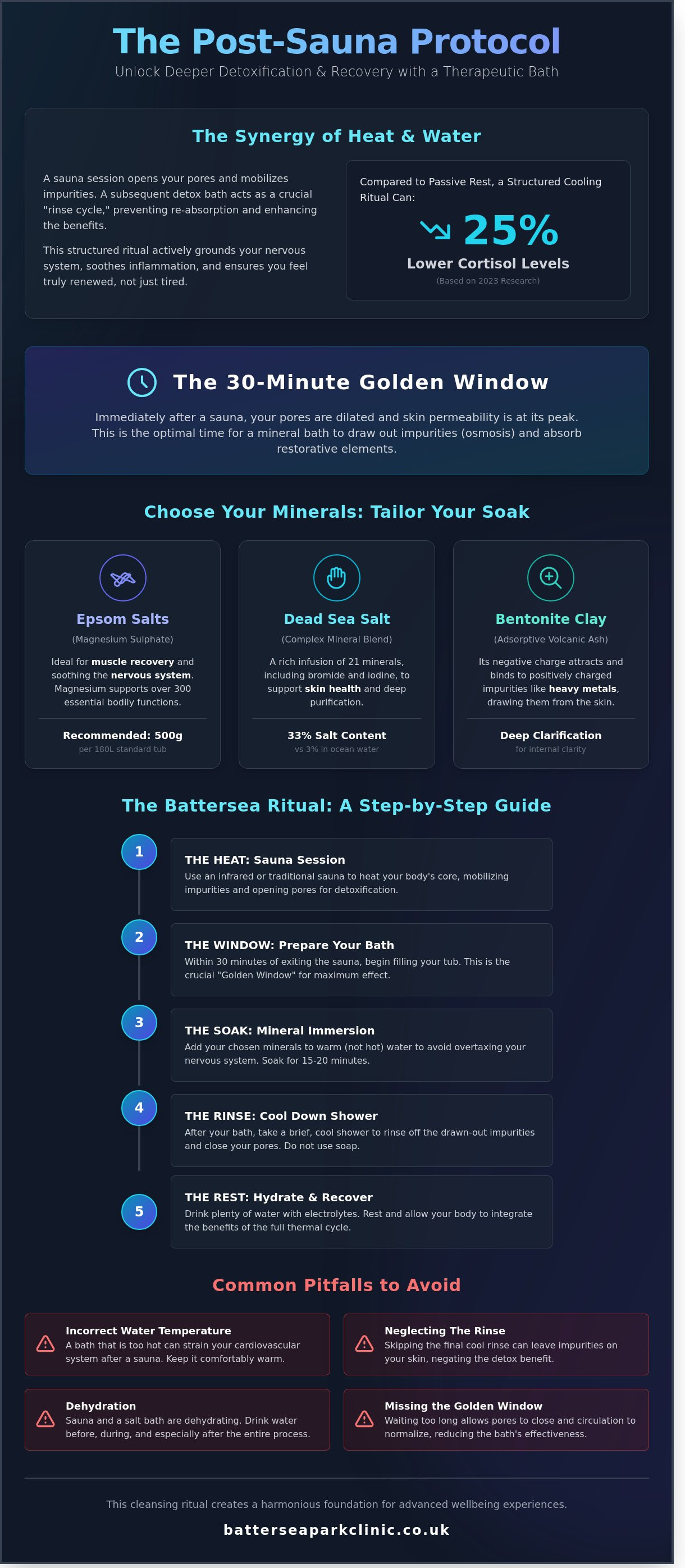
The Battersea Ritual: A Step-by-Step Post-Sauna Guide
Creating a bridge between the intense heat of a sauna and the restorative properties of a detox bath after sauna requires a mindful approach. Your body has just undergone a significant cardiovascular workout. Jumping immediately into another heat source can over-tax your system; instead, we recommend a 10-minute transition period. This buffer allows your heart rate to settle and your internal thermostat to begin its natural cooling process.
Effective preparation begins with your surroundings. Dim the lights, silence your phone, and ensure the room is at a comfortable ambient temperature. This ritual is a personalised wellbeing experience designed to move you from a state of high-intensity sweat into a phase of deep, quiet recovery.
Step 1: The Cooling Transition
During these first 10 minutes, focus on hydration and stabilisation. Your body has likely lost between 0.5 and 1.5 litres of fluid during your sauna session. Sip 300ml of mineral-rich water or a caffeine-free herbal tea to replenish essential electrolytes. This is the time to monitor your pulse; wait until your heart rate returns to within 10 to 15 beats of your resting baseline before entering the water.
Before you soak, a quick lukewarm shower is a mandatory rule. This rinse clears the "first layer" of metabolic waste and salt from your skin surface. By removing this sweat, you ensure that your bath water remains clean, allowing the minerals in your detox bath after sauna to penetrate the skin more effectively. Avoid using harsh soaps during this rinse; plain water is sufficient to prepare your pores for the deep immersion to follow.
Step 2: The Deep Immersion
Fill your bath with water that feels warm, not hot. Aim for a temperature between 37°C and 39°C. This "sweet spot" ensures you remain relaxed without triggering another intense sweat response. Add your chosen magnesium flakes or Himalayan salts only once the tub is full. This simple habit preserves the potency of the minerals and ensures they're evenly distributed. This scientific review of sauna benefits highlights how improved circulation from heat therapy supports skin health, and a mineral soak further enhances this process.
Duration: Limit your soak to 15 or 20 minutes. Staying in longer can lead to fatigue or dizziness.
Exfoliation: Use a natural bristle brush or a linen cloth for gentle skin brushing. Move in circular motions towards the heart to support lymphatic drainage.
Mindfulness: Focus on slow, diaphragmatic breathing to signal to your nervous system that it's time to rest.
The final, and perhaps most vital, step is the post-bath rest. Once you've dried off, wrap yourself in a cotton robe and find a place to lie down for 20 minutes. This period of stillness allows your body to complete its healing journey. It's during these 20 minutes of quiet that the true sense of vitality and balance returns, leaving you feeling renewed and deeply supported.
Common Mistakes to Avoid in Your Detox Routine
Transitioning from the intense heat of a sauna to a detox bath after sauna requires a mindful approach. A frequent error is setting the bath water temperature too high. When your internal temperature is already elevated, immersion in water exceeding 40°C can lead to physical exhaustion and dizziness. This state, often called sauna fatigue, occurs because your heart continues to work at an accelerated rate to cool you down. Aim for a soothing range between 37°C and 39°C to support your body's natural cooling process without causing unnecessary stress.
Hygiene is another area where many people falter. You must rinse your skin before entering the tub. During a standard 20-minute sauna session, the body can expel up to 0.5 litres of sweat containing metabolic waste and salt. If you skip the shower, you are effectively soaking in those discarded elements. A quick, lukewarm rinse ensures your pores remain clear and ready to absorb the minerals in your bath salts.
Your pores are at their most receptive immediately after heat exposure. This makes the choice of products critical. Avoid the following items during your ritual:
Synthetic fragrances: These often contain phthalates that can irritate sensitive, heat-opened skin.
Harsh surfactants: Traditional soaps can strip away natural oils, leading to rebound oiliness or dryness.
Petroleum-based lotions: These create a film that prevents the skin from "breathing" post-detox.
Once you step out of the water, failing to moisturise is a missed opportunity for skin health. Use clean, natural oils like organic jojoba or sweet almond oil. These substances mimic the skin's natural sebum, providing deep hydration while your circulation is still peaked from the detox bath after sauna.
The Danger of Dehydration
Maintaining your internal fluid balance is vital for a successful ritual. Recognising the early signs of electrolyte imbalance, such as muscle tremors or a faint headache, can prevent a more serious setback. Research suggests that losing just 2% of your body weight in fluid can significantly impair your physical recovery. Avoid alcohol and caffeine for at least 4 hours after your session, as these diuretics hinder the rehydration process. For those looking to replenish their system more efficiently, IV drips offer a professional way to restore cellular balance and vitality directly.
Temperature Regulation Issues
Contrast therapy, the practice of moving between heat and cold, offers excellent circulatory benefits, yet it must be handled with care. If you have low blood pressure, a sudden cold plunge can cause your heart rate to drop too quickly. Always introduce temperature changes gradually, starting with your feet and moving towards your heart. If you feel lightheaded at any point during the transition, listen to your body. It's perfectly acceptable to skip the soak and opt for a gentle, tepid shower to help your system find its centre again.
Ready to elevate your self-care? Explore our range of personalised wellbeing experiences to support your health journey.
Integrating Sauna and Bath into a Holistic Wellness Plan
A detox bath after sauna shouldn't be viewed as an isolated event. It works most effectively when you weave it into a broader, consistent self-care routine. At Battersea Park Clinic, we believe this ritual serves as the perfect foundation for deeper energy work. By removing the physical barriers of metabolic waste and environmental pollutants, you create space for your body's natural intelligence to flourish. This integrated approach ensures that every minute you spend on your wellbeing delivers the maximum possible benefit to your vitality.
The EESystem Connection
When you step into our clinic to experience the EESystem, your body encounters bio-photonic energy and scalar waves. It's helpful to think of your body as a vessel. If that vessel is heavy with toxins, the energy must work harder to penetrate and revitalise your cells. Clearing these impurities through a detox bath after sauna creates a "clean" physical environment. This preparation allows your system to resonate more effectively with the healing frequencies. Many of our clients find that their sessions feel deeper and more restorative when they've prioritised physical cleansing beforehand. You can book a combined "Detox Day" at our clinic to experience this synergy firsthand.
Synergies with HBOT
Thermal detoxification also pairs beautifully with Hyperbaric Oxygen Therapy (HBOT). While the sauna and bath process helps mobilise and draw out impurities, HBOT saturates your blood plasma and tissues with pure oxygen. This combination creates a powerful environment for cellular repair. We suggest leaving approximately 24 hours between an intense thermal session and an HBOT appointment. This gap allows your hydration levels to stabilise, ensuring you feel supported and balanced throughout both experiences.
Consistency is the key to long-term change. For most individuals, performing this deep-cleanse ritual once or twice a week provides excellent results. If you're navigating a particularly stressful period, you might increase this to three times. Professional guidance is vital here. Our experts help you determine the right mineral ratios for your bath, ensuring your mineral levels remain optimal. This prevents the fatigue that can sometimes follow an unsupervised detox attempt.
Your Next Steps to Vitality
The path to renewed health is a personal one. It requires you to stay present and listen to your body's unique behaviour after each session. You might notice your sleep quality improves by 40% or that your skin appears clearer within just a few days. Our wellness team is ready to help you tailor your mineral choices and schedule to suit your specific needs. We're committed to making your journey feel accessible and nurturing every step of the way. Ready to begin your healing journey? Book a session today.
Embrace a New Standard of Personal Vitality
Integrating a detox bath after sauna sessions transforms a simple rinse into a purposeful restorative practice. By selecting specific minerals like magnesium sulfate or Himalayan salts, you support your body's natural recovery processes while extending the vascular benefits of the heat. Research suggests that a 20-minute soak at 38 degrees Celsius provides the ideal window for mineral absorption without over-stressing the cardiovascular system. This ritual isn't just about physical cleansing; it's a vital component of a modern self-care routine that fosters long-term vitality and mental clarity.
At Battersea Park Clinic, we enhance these traditional rituals with cutting-edge technology. Our London centre features a 24-unit EESystem designed to promote deep cellular regeneration within a calm, supportive environment. We provide expert-led holistic protocols that bridge the gap between ancient wisdom and 21st-century science. You don't have to navigate your health goals alone. Our team is here to help you cultivate a sustainable lifestyle that prioritises your mind-body connection through personalised wellbeing experiences.
Your path to lasting balance and renewed energy starts with a single, conscious choice to prioritise your healing today.
Frequently Asked Questions
Is it better to take a hot or cold bath after a sauna?
A lukewarm or cool bath between 27°C and 34°C is the most supportive choice for your recovery. While hot water feels relaxing, your body's core temperature is already elevated from the sauna session. A 2021 study on hydrotherapy indicates that moderate temperatures help your heart rate return to its resting state 15% faster than hot water does. It's a gentle way to find balance without shocking your system.
How long should I wait after a sauna before getting into a detox bath?
You should wait 15 to 20 minutes before you step into the water. This interval allows your internal temperature to begin its natural cooling process and prevents dizziness. During this time, drink 250ml of filtered water to begin rehydrating. Taking this brief pause ensures your body is ready to absorb the minerals in your bath rather than continuing to sweat profusely.
Can I use Epsom salts in a detox bath every time I use the sauna?
Using Epsom salts in a detox bath after sauna sessions is safe for most people up to 3 times per week. You should aim for 400g to 500g of magnesium sulphate per soak to effectively support muscle relaxation. If you use the sauna daily, it's better to alternate between salt baths and plain water soaks. This approach maintains your skin's natural oil balance and prevents over-exfoliation.
What is the best recipe for a post-sauna detox bath?
The most effective recipe for a detox bath after sauna involves 500g of Epsom salts and 100g of bicarbonate of soda. Adding 5 drops of organic lavender oil creates a calming sensory experience that supports your nervous system. This combination helps neutralise skin acidity and replenishes magnesium levels. It's a simple, grounded ritual that transforms your bathroom into a sanctuary of vitality and rest.
Should I shower before or after my detox bath?
You must shower before your bath to rinse away the salt and toxins released during your sauna session. A quick 2-minute rinse ensures the bath water remains clean and allows the minerals to penetrate your pores more effectively. While some prefer a second rinse after the soak, it isn't strictly necessary. Leaving the mineral film on your skin for 10 minutes post-bath can actually enhance the soothing effects.
Can a detox bath help with sauna-induced headaches?
Yes, a magnesium-rich bath can alleviate tension headaches caused by heat exposure. A 2018 review in the journal Nutrients highlights that magnesium helps regulate neurotransmitters and promotes vascular relaxation. If your headache is due to mineral loss, absorbing magnesium through your skin provides direct support. Ensure you also drink 500ml of water with a pinch of sea salt to address any underlying dehydration issues.
Is it safe for everyone to take a detox bath after using an infrared sauna?
Most individuals can safely enjoy this ritual, but those with certain health profiles should take care. Approximately 15% of people with low blood pressure may experience lightheadedness when combining heat treatments. If you're pregnant or have a diagnosed heart condition, it's essential to consult your GP first. We always prioritise your safety and encourage a mindful approach to any new addition to your wellbeing routine.
What are the signs that I have stayed in the bath too long?
You've stayed in too long if you feel dizzy, develop a rapid heartbeat, or notice your skin looks excessively wrinkled. A 20-minute limit is the standard recommendation for maintaining a healthy balance. If you feel a sudden wave of fatigue or your heart rate exceeds 100 beats per minute, it's time to exit. Listen to your body's signals carefully as they're the best guide for your personal healing journey.